
Therapist-First Design: Built by Clinicians, For Clinicians
The digital health revolution has produced countless rehabilitation apps, but most share a fundamental flaw: they're designed by engineers and business analysts, not clinicians. The result is software that optimizes for insurance reimbursement metrics rather than patient outcomes, interfaces that require extensive training to navigate, and data outputs that don't align with clinical decision-making workflows.
TropX was born from a different philosophy: built by therapists, for therapists. Every feature was designed in collaboration with practicing physical therapists and orthopedic specialists who understand the daily realities of clinical care. The platform's web dashboard is intuitive because it mirrors how clinicians actually think about patient management. The data outputs are relevant because they answer the questions therapists actually ask.
Clinical Workflows, Not Corporate Workflows
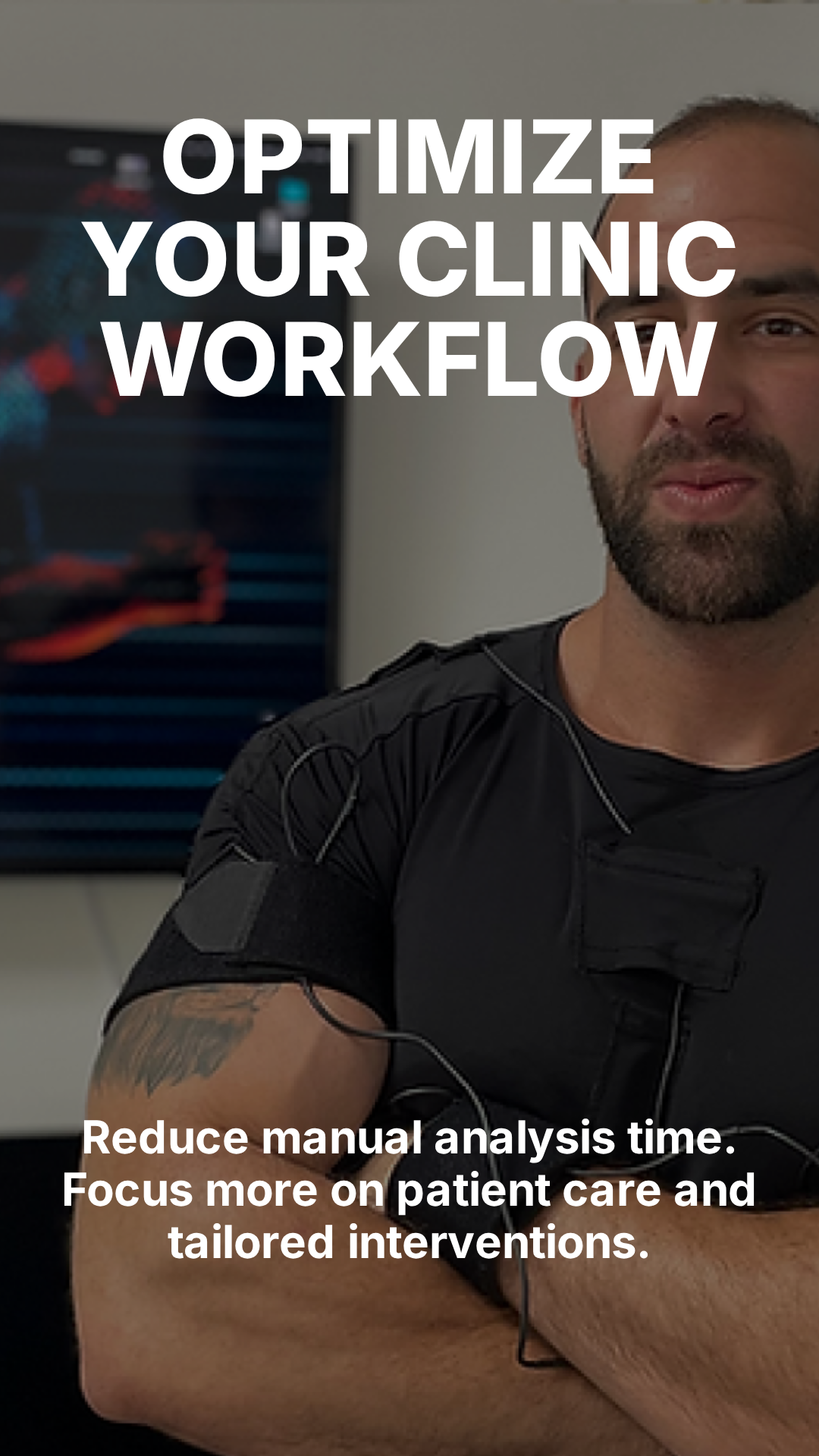
Insurance-driven platforms impose artificial constraints: predetermined exercise sequences, fixed session durations, limited customization options. These limitations exist to simplify billing codes and reimbursement processes, not because they improve patient care. Therapists find themselves forced to adapt their clinical judgment to software limitations rather than the software adapting to clinical needs.
TropX inverts this relationship. The platform gives clinicians complete control. Programs can be fully customized to individual patient needs. Exercise libraries are extensible. Session structures are flexible. Progression timelines adapt to actual patient performance rather than insurance company schedules. Therapists can annotate sessions with clinical notes, adjust protocols on the fly, and override AI suggestions when their expertise dictates a different approach.
Data That Informs Clinical Decisions

Generic wellness apps track step counts and active minutes. These metrics are fine for general fitness, but useless for post-operative knee rehabilitation. TropX provides clinical-grade data: precise range-of-motion measurements, left/right symmetry ratios, force production during functional tests, and biomechanical quality scores during exercise performance.
The dashboard displays this data in formats that support clinical reasoning. Progress graphs show not just that a patient is improving, but whether improvement is tracking with expected post-surgical timelines. Comparison views highlight asymmetries that warrant attention. Session reports provide exportable documentation for insurers and referral sources, demonstrating objective improvement with clinical precision.
Professional Tools for Professional Outcomes
- •Intuitive clinical dashboard: Patient overview shows current status, recent progress, compliance trends, and upcoming milestones at a glance, with drill-down capabilities for detailed session analysis and longitudinal tracking
- •Comprehensive session reports: Every exercise session generates detailed biomechanical reports including movement quality scores, range-of-motion measurements, symmetry analysis, and AI-generated observations that can be exported for documentation
- •Flexible program customization: Therapists select exercises from extensive libraries, set individualized parameters, define progression criteria, and adjust protocols based on their clinical assessment without software constraints
- •Compliance and engagement tracking: Real-time visibility into patient adherence patterns, exercise completion rates, and quality of home program execution, enabling proactive outreach when engagement declines
- •Collaborative care tools: Secure sharing of patient data with referring surgeons, team physicians, and other stakeholders in the care continuum, with granular permission controls and HIPAA-compliant communication
- •AI suggestions, not mandates: The system provides predictive insights and protocol recommendations based on ML analysis, but clinicians always maintain final decision authority and can document rationale for diverging from suggestions
- •EMR integration pathways: Compatible with existing electronic medical record systems and exercise libraries, minimizing disruption to established workflows and eliminating redundant data entry
First-Therapist, Not First-Insurer
The distinction between therapist-first and insurer-first design becomes apparent in how platforms handle protocol decisions. Insurance-driven apps present predetermined programs: 'ACL protocol, 12 weeks, these exercises, this progression.' Deviation requires justification and documentation burden. The implicit message is that the software knows better than the clinician.
TropX respects clinical expertise. Therapists define goals based on individual patient assessment. The AI provides suggestions informed by population data and ML analysis. But the therapist always decides. When AI recommendations align with clinical judgment, the system accelerates care delivery. When they diverge, therapist expertise prevails and the system learns from the decision.
This philosophy acknowledges a fundamental truth: rehabilitation is medicine, not software engineering. Technology should amplify clinical capabilities, not constrain them.
For physical therapy clinics adopting digital rehabilitation tools, the distinction between therapist-first and insurer-first platforms determines whether technology enhances clinical practice or burdens it. TropX was designed to earn clinician trust by respecting their expertise, supporting their workflows, and providing data that genuinely informs patient care decisions.
The result is a platform that practicing therapists actually want to use, not one they're forced to tolerate. And when clinicians embrace technology rather than resist it, patient outcomes improve. That's the promise of therapist-first design: better tools for clinicians, better outcomes for patients, better evidence for the value of specialized rehabilitation care.